How to Choose XLR Splitter Cable: 1 Male to 2 Female or the Reverse
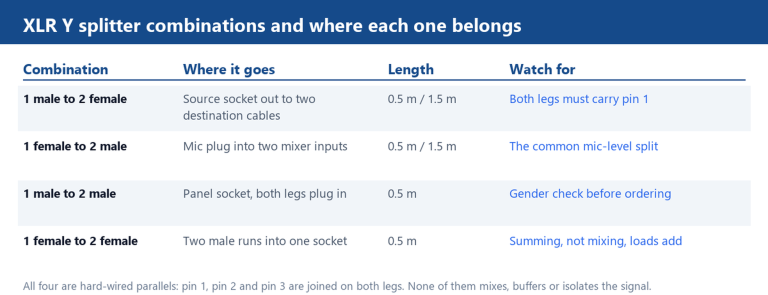
A practical way to pick the gender combination and length of a passive XLR Y splitter, and what the second parallel input does to level, phantom power and hum.

XLR, guitar and Speakon cable guides: shielding, impedance and connector choices for stage, studio and rental use.
A practical way to pick the gender combination and length of a passive XLR Y splitter, and what the second parallel input does to level, phantom power and hum.
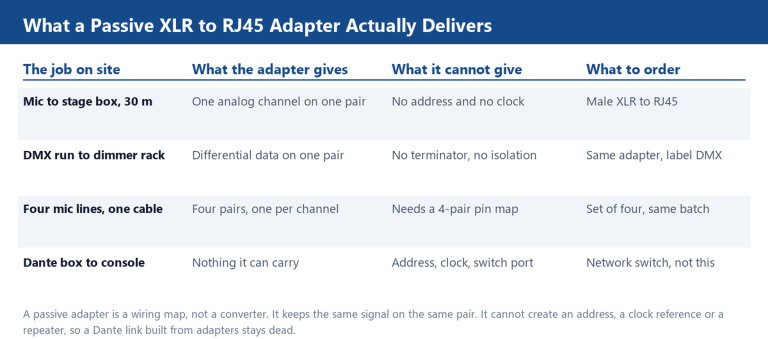
Why a 3-pin XLR to RJ45 adapter only moves one analog pair or a DMX stream, and what a Dante link needs that passive copper cannot supply.
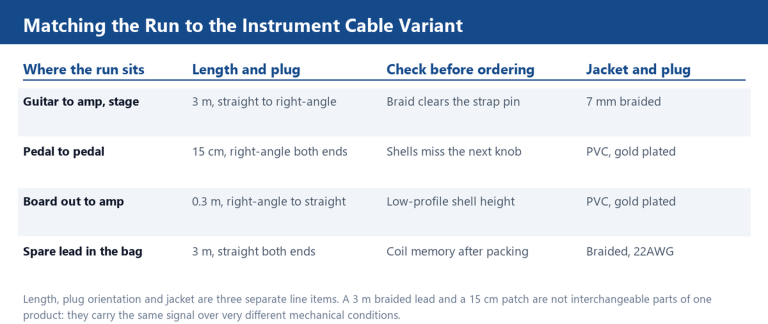
A buyer guide to unbalanced instrument cable: conductor gauge, shield coverage, plug shell clearance and the lengths that belong on a pedal board.
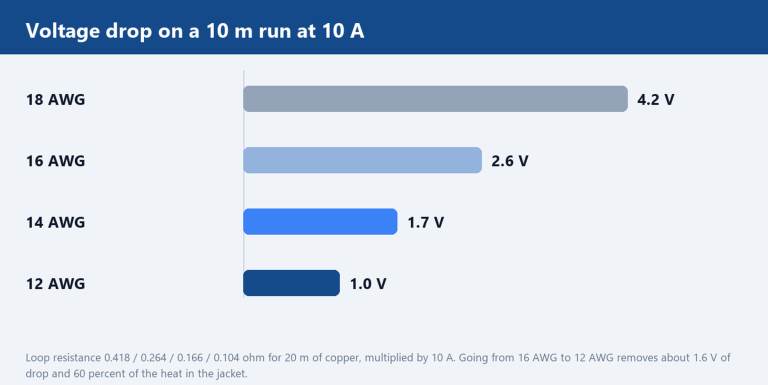
A buyer guide to speaker output cable: sizing the gauge from amplifier current and run length, using the second pole pair, and testing a sample before a container order.
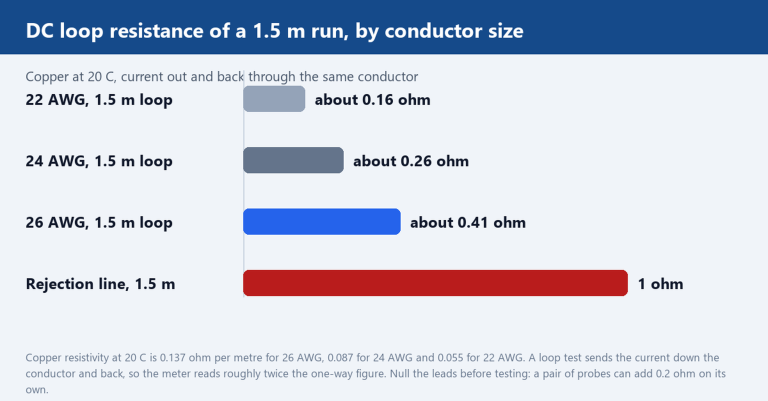
A 1.5 m XLR-to-dual-RCA run fails in ways a listening test cannot hear. Here are the continuity, shield and polarity readings that decide pass or fail, with the bands to write into a receiving sheet.
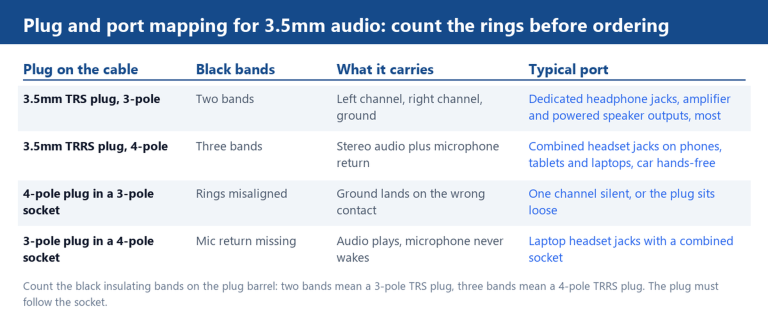
A buying guide to 3.5mm stereo cables: tell a 3-pole TRS plug from a 4-pole TRRS plug, match the plug to the port, and pick shield, plug angle and length with confidence.
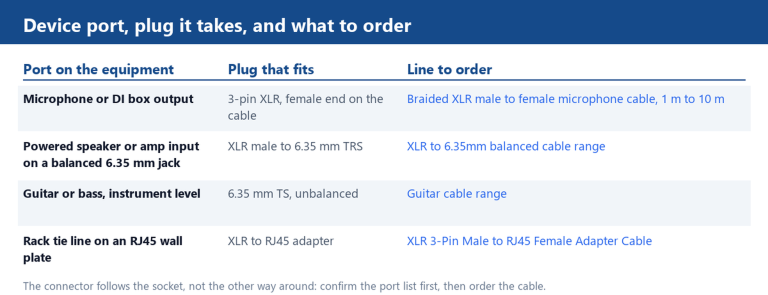
A practical XLR vs TRS cable decision guide for stage and install buyers: which plug each device port takes, how each connector fails, and what to specify for a mixed rack.
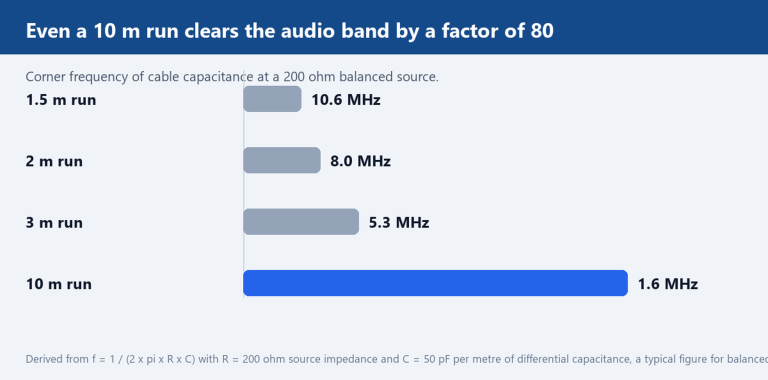
Why balanced XLR runs stay clean far longer than unbalanced lines: capacitance numbers per metre, the 1.5 m, 2 m and 3 m stock picks, and custom runs up to 10 m.