Audio Video Cable for Home Theater: A Four-Segment Run Plan
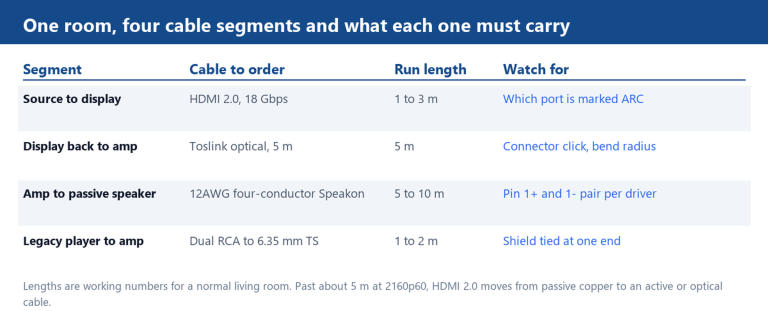
A segment-by-segment plan for cabling one living room: which hop has to be HDMI 2.0, where a 5 m Toslink run solves a hum problem, and when a speaker run needs 12AWG four-conductor Speakon.

A segment-by-segment plan for cabling one living room: which hop has to be HDMI 2.0, where a 5 m Toslink run solves a hum problem, and when a speaker run needs 12AWG four-conductor Speakon.
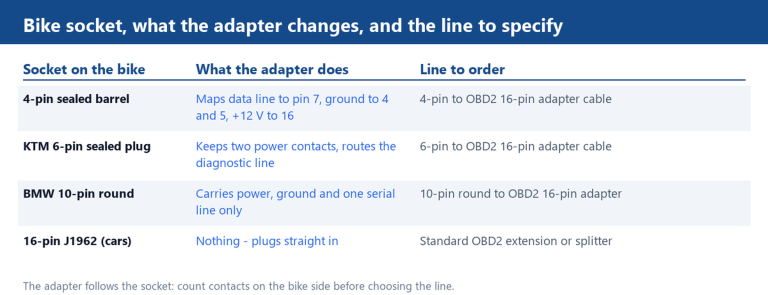
A bike bench runs on adapters, not on one universal cable. Here is what each round diagnostic socket carries and how to stock a mixed set for a season.
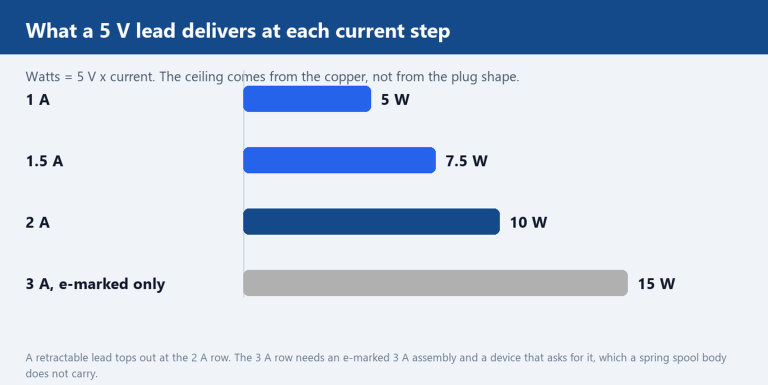
A practical way to specify a retractable USB cable: real reach at the ratchet stop, the 5 V 2 A ceiling set by the conductor, tip mix on one body, and the two sample tests that predict returns.
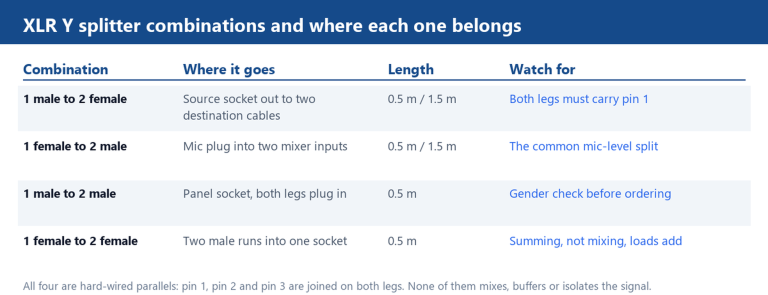
A practical way to pick the gender combination and length of a passive XLR Y splitter, and what the second parallel input does to level, phantom power and hum.
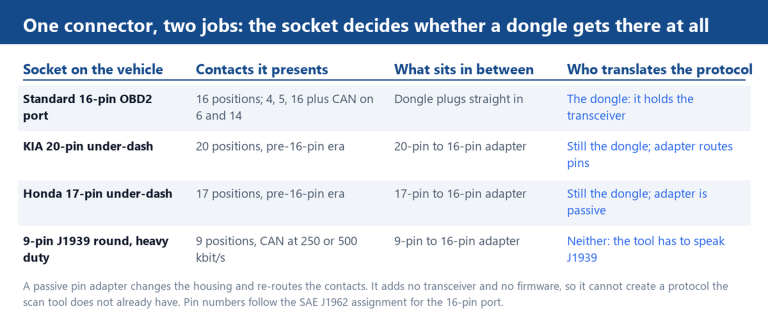
The dongle translates the protocol and the adapter only moves pins. How to tell which one a no-communication fault is asking for, and what to specify on the cable.
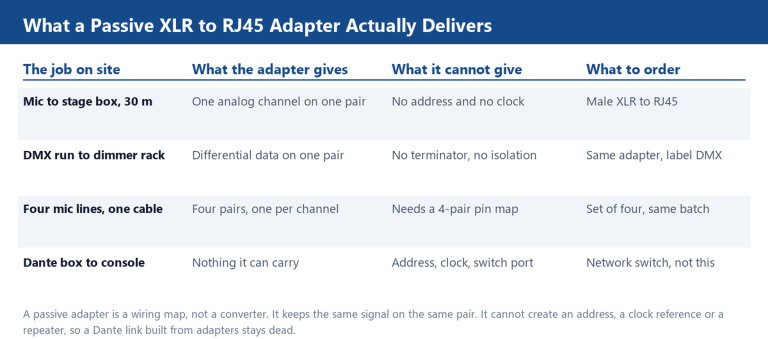
Why a 3-pin XLR to RJ45 adapter only moves one analog pair or a DMX stream, and what a Dante link needs that passive copper cannot supply.
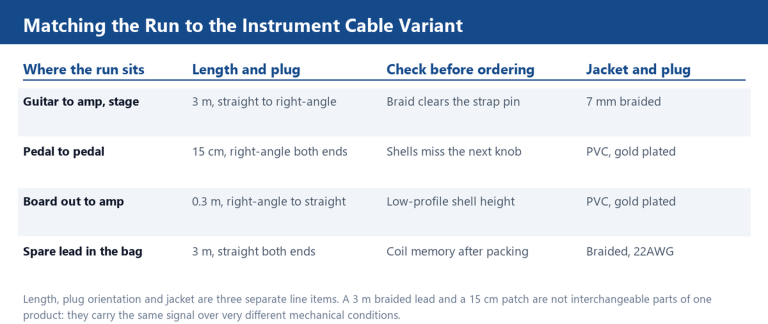
A buyer guide to unbalanced instrument cable: conductor gauge, shield coverage, plug shell clearance and the lengths that belong on a pedal board.
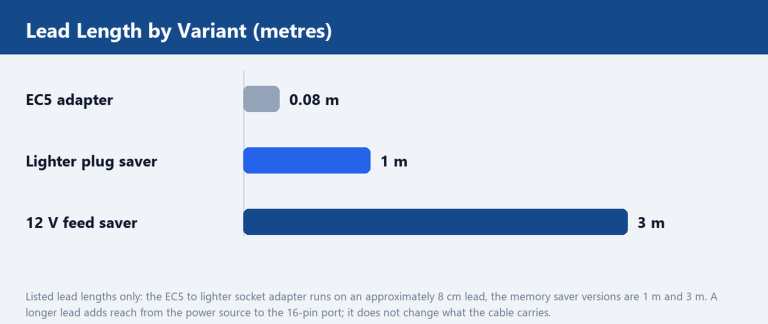
A buyer guide to OBD2 memory saver cables: how the 1 m lighter plug, the 3 m 12 V feed and the 2-in-1 alligator version differ, how to read the source end, and the checks to run before the battery comes off.
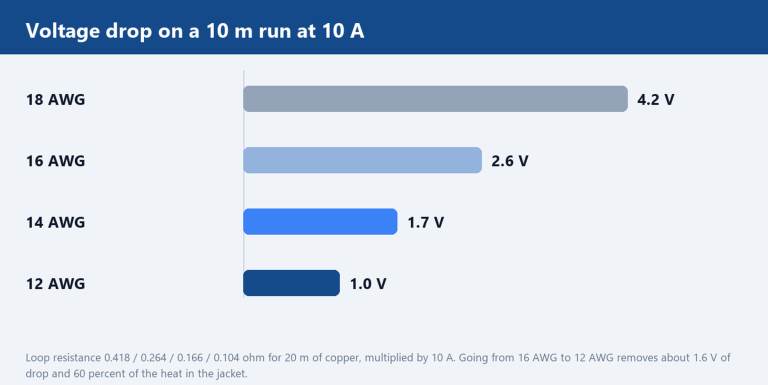
A buyer guide to speaker output cable: sizing the gauge from amplifier current and run length, using the second pole pair, and testing a sample before a container order.
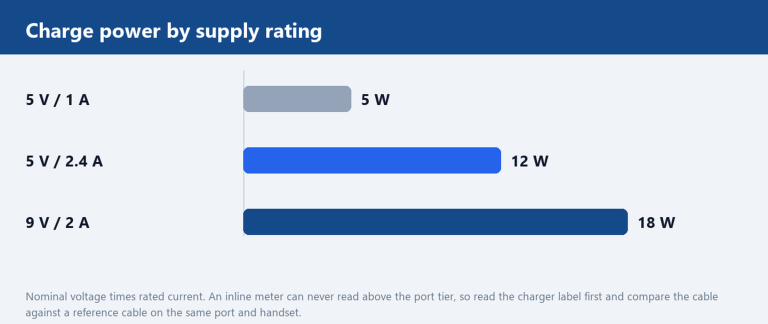
A repeatable bench routine for returned iPhone cable lots: plating, click and retention, current over five minutes, and the data pair test that separates charge-only from broken.